The benefits of cooking with kids go far beyond the food. The kitchen is one of the best places at home for development: a real task, steps in order, and plenty of work for the hands and senses. And at the end, something tasty to eat.
The hands get to work
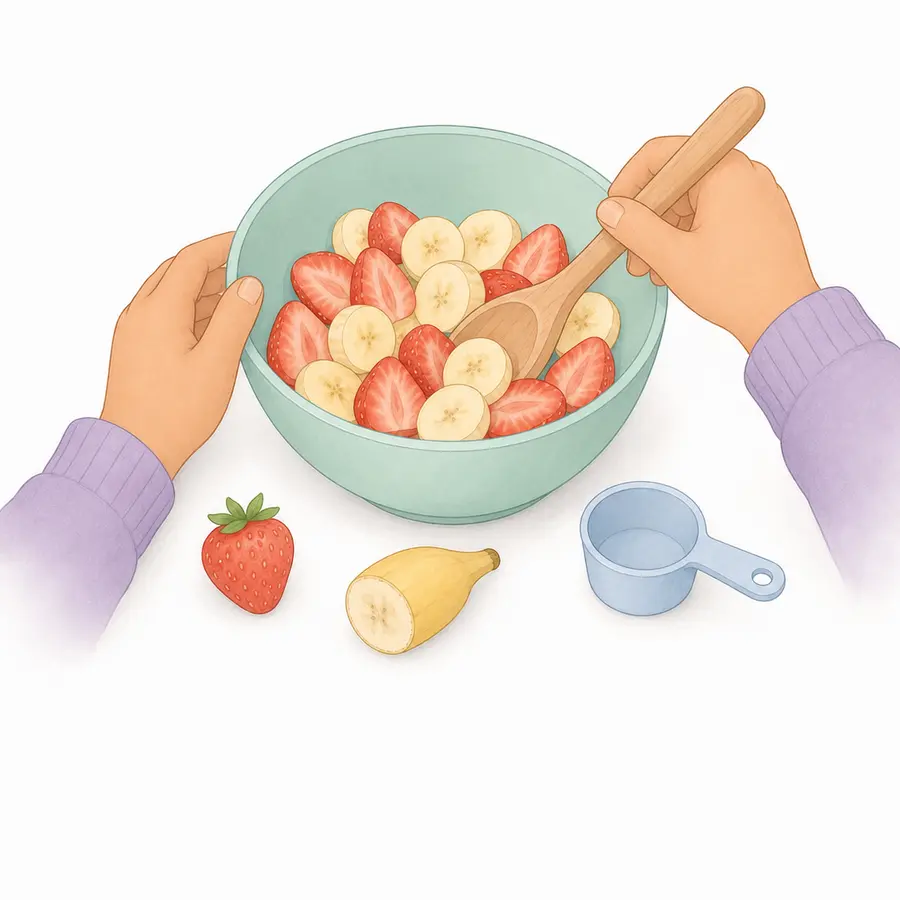
Stirring strengthens the shoulder and wrist. Spreading, peeling and sprinkling practice fine motor skills and two hands working together: one holds, the other works. These are exactly the skills needed later for cutting and writing.
The mind plans
A recipe is a sequence: prepare, mix, bake. A child who follows a recipe practices planning, memory and waiting. Illustrated recipes with a picture for every step let even a child who can't read yet follow along alone.
Language and math
"Two spoons", "half a cup", "one more", "more" and "less". The kitchen is full of quantity words, and new words too: chop, whisk, sticky, crunchy.
Meeting new foods
Picky eaters taste something they made themselves far more easily. Even touching, smelling and stirring without tasting is progress.
Cooking with kids: what each age can do
- Ages 2 to 3: wash vegetables, pour measured ingredients, stir, sprinkle.
- Ages 4 to 5: spread, cut soft foods with a table knife, crack an egg.
- Ages 6 and up: measure, use a peeler, read a simple recipe, cut with supervision.
And to keep the curiosity going, the site's science experiments for kids use many of the same things you already have in the pantry.