The board flies, the cards scatter, and someone is crying. Losing is a very frustrating moment for young children, and that is natural: they are still learning to handle strong feelings. Here is how to help a child who hates losing, because it can be taught like any other skill.
How to help a child who hates losing: start with chance
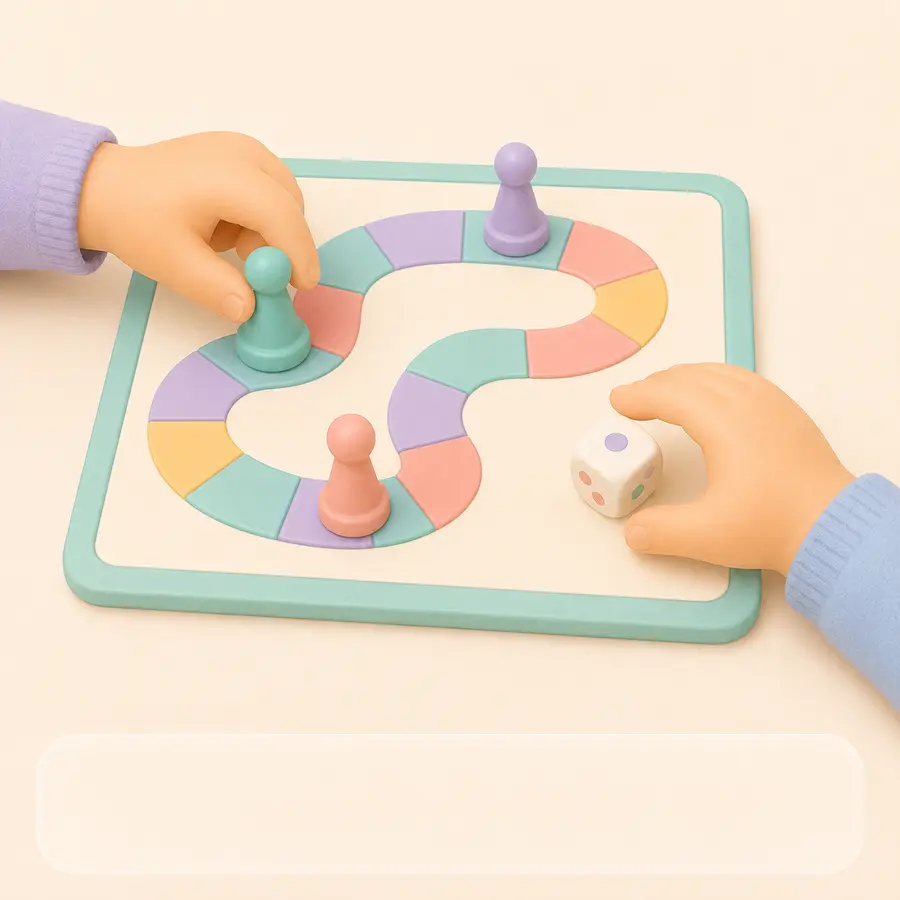
When the die decides, losing is easier: "I didn't lose because I'm bad, I just rolled a small number."
Cooperative games
In games where everyone plays together against the game, children practice rules and turns without the stress of who won. The site's board game guide has games by age and by what they develop.
Give the feeling a name
"You're disappointed because you wanted to win." Once a feeling has a name, it is less overwhelming. Then suggest what to do with it: take a breath, say "Oh no!", ask for another round.
Show how it's done
When you lose, say it out loud: "Oh, I lost. A bit disappointing, but it was fun. Another round?". Children learn more from what they see than from what they're told.
Don't always lose on purpose
It's tempting to let your child win every time, but then they never practice. Let them win sometimes and lose sometimes, when they have the energy, not when they're tired or hungry.
A social story about losing
The social story builder has a ready story about losing a game. Read it before playing, so your child comes to the game with a plan.