Mornings Without Yelling: 7 Morning Routine Tips for Kids
Seven tips from an occupational therapist for calmer mornings with kids: prep the night before, a fixed order, a visual board and step-by-step independence.
Mornings are one of the busiest times at home: everyone is rushing, your child is not awake yet, and the second shoe has vanished. The good news: most morning fights are not about a child who won't cooperate, but about too many decisions, too many words and too little time. Here are seven things that work even in busy homes.
1. Start the night before
Choose clothes, pack the bag and put shoes by the door in the evening. Every decision you move to the evening is one fewer argument in the morning.
2. The same order, every day
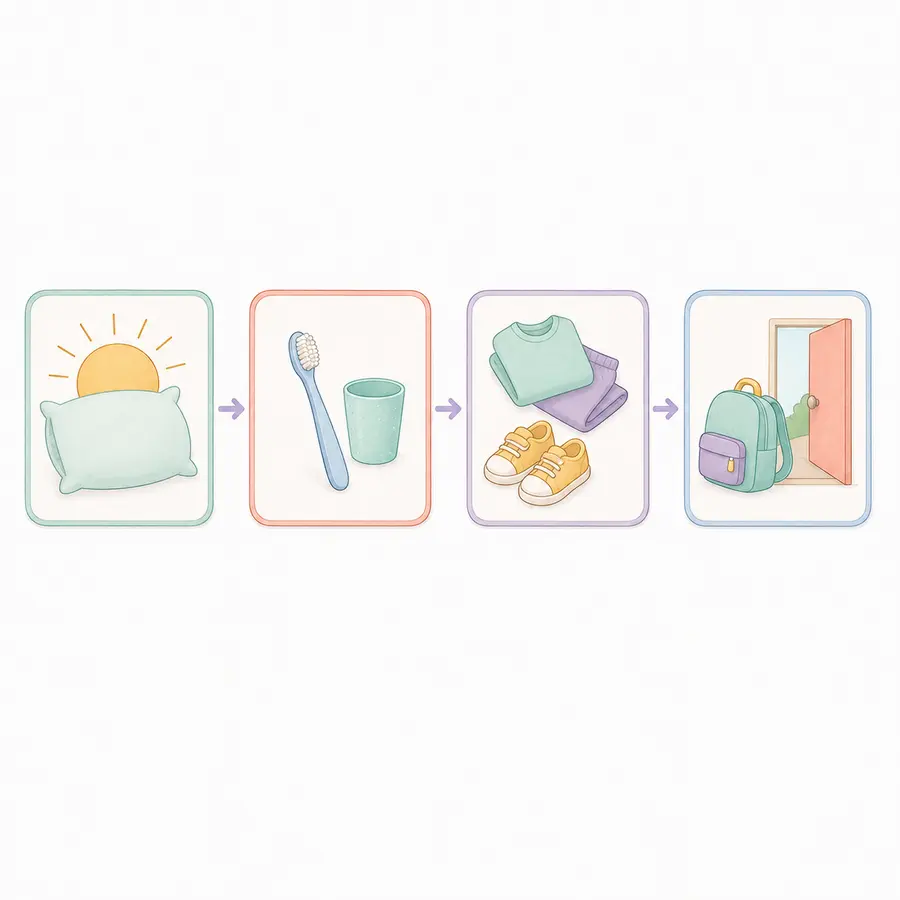
When the order is fixed – get up, bathroom, get dressed, eat, brush teeth, shoes on – your child does not have to think about what comes next. The body learns the sequence, and the morning becomes more automatic.
3. Show instead of telling
Many children struggle to remember a list of spoken instructions, especially in the morning. A visual board with a picture for each step lets your child check what is next on their own. With the site's morning routine board you can build a board with your steps, in your order, and print it.
4. Fewer words, more pointing
Instead of "How many times have I told you to get dressed?" simply ask "What's next on the board?". Pointing to the board takes the tension out of the conversation and lets your child feel in charge of the morning.
5. Allow real time
If the morning is always rushed, it is probably too short. Ten more minutes can turn a morning of yelling into a calm one. Children who wake up slowly or need "warm-up time" especially need this room.
6. Independence in small steps
You don't need to ask your child to do everything alone at once. Start with one step they do completely on their own – for example putting on shoes – and add a step once it works. Easy clothes (elastic waists, Velcro shoes) help a lot.
7. End on a success
When all the steps are done, mark it: a sticker, a cheer, or a minute of play together before leaving. A child who ends the morning feeling successful arrives calmer at preschool or school.