What is a routine board for kids?
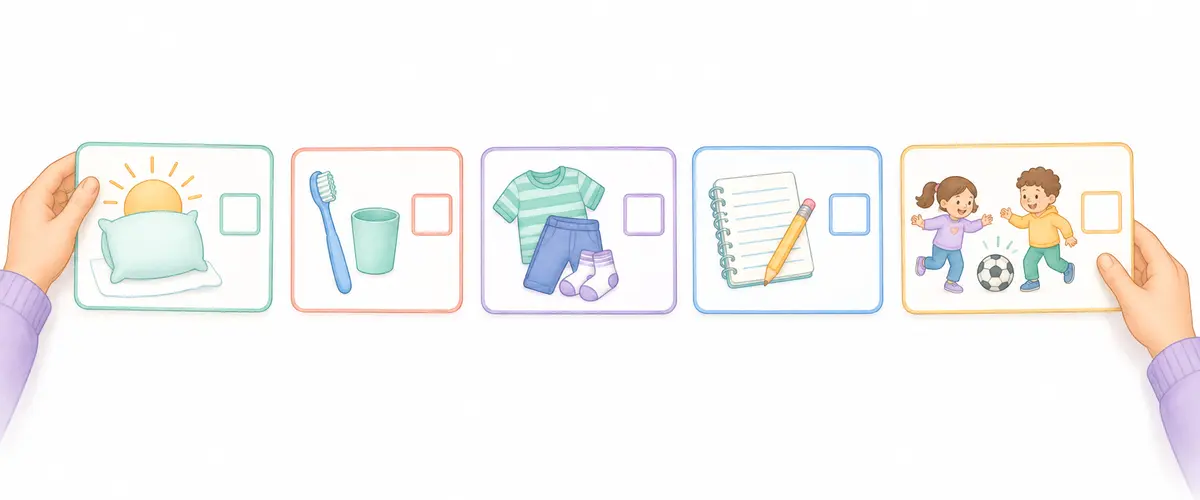
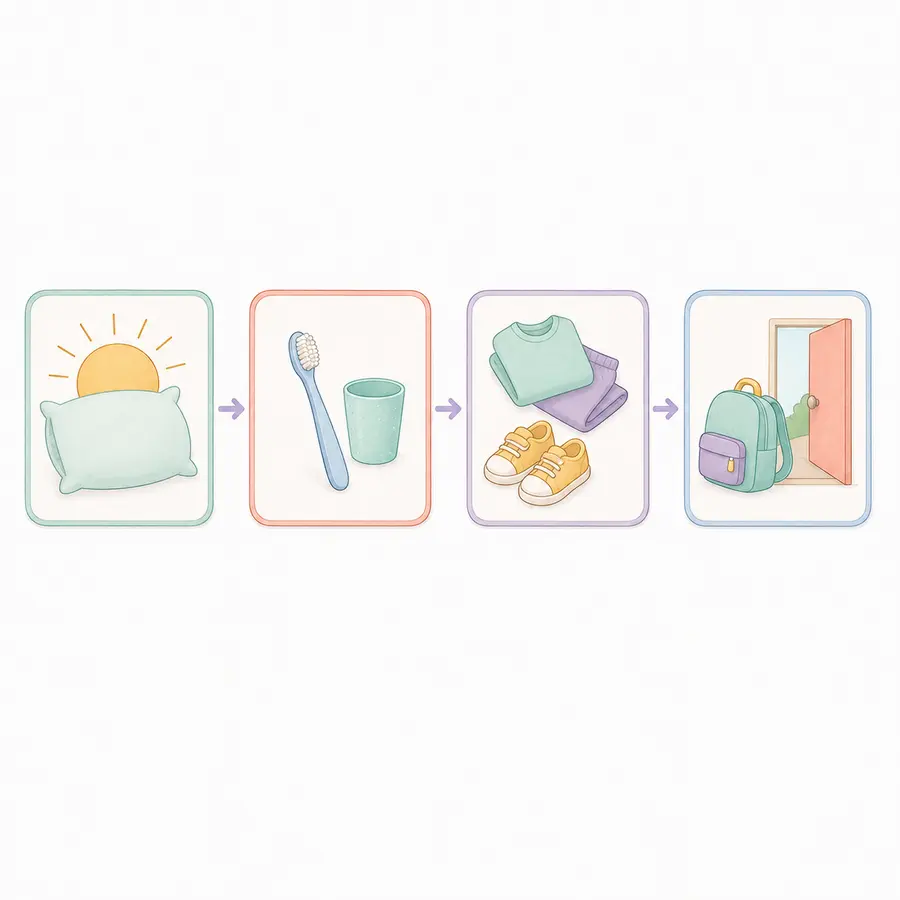
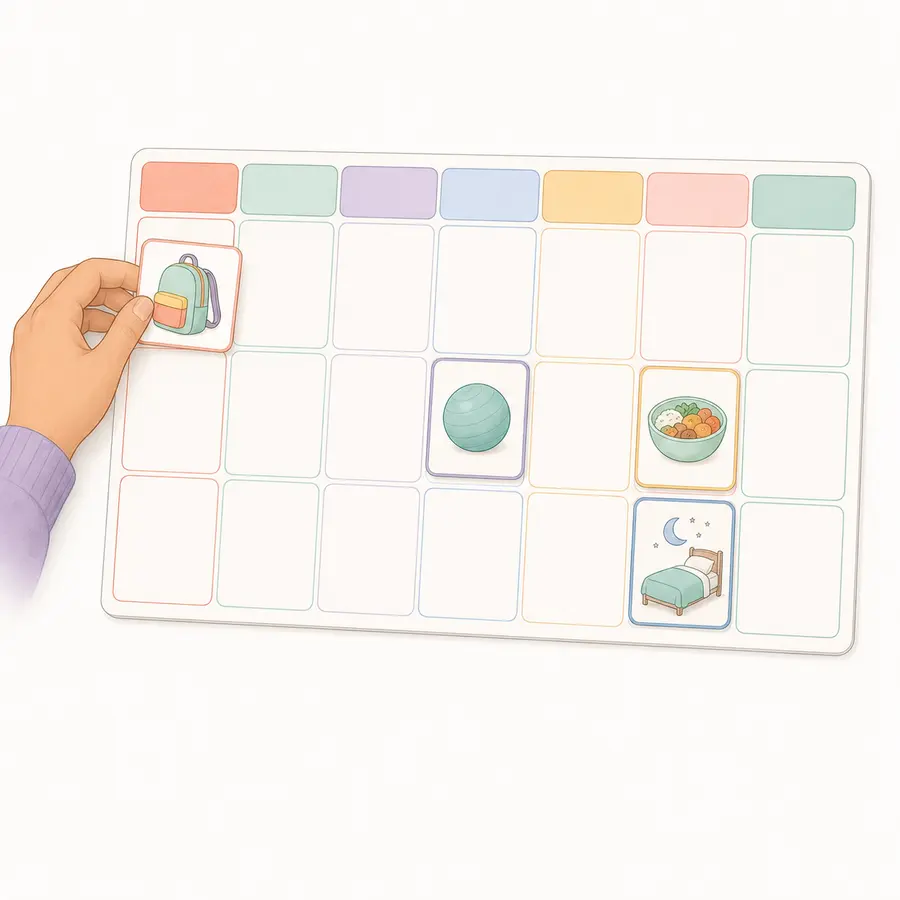
A routine board is a sequence of pictures that shows your child the steps of a routine in order: get out of bed, get dressed, brush teeth, eat breakfast, and leave the house. Instead of remembering every step or waiting for a reminder from an adult, your child can see what is already done and what comes next.
It is also called a visual schedule, a routine chart, or a picture schedule. The idea is the same: turn spoken instructions into a sequence your child can see.
Why does a routine board help?
- Less to remember. Young children find it hard to hold a long list of instructions in mind. A picture stays in front of them after the spoken instruction is forgotten.
- More independence. When your child checks the next step on their own, your job changes from giving instructions to encouraging and praising.
- Fewer arguments. The board sets the order, not you. This takes much of the struggle out of routines, especially in the morning and at bedtime.
- Predictability and confidence. Knowing what comes next is reassuring and makes it easier to move from one activity to the next.
Who is it for?
Most children can start around age two to three, once they recognize familiar actions in a picture, such as brushing teeth or putting on shoes. Visual schedules are especially helpful for children who struggle with attention, regulation, or organization, for autistic children, and for any child going through a change: a new preschool, a new sibling, or a move.
Children who already read also benefit from a picture board, because a picture is understood at a glance, faster than words.
How to make a routine board that works
- Start small. Three to five steps for young children, and up to eight to ten for older ones. Add steps once the routine becomes a habit.
- One step per picture. "Brush teeth" and "wash face" are two separate steps.
- Keep the same order. The same order every day turns the board into a habit, and over time your child will need it less.
- Choose a character your child relates to. In our boards you can choose a boy or a girl and a character that looks like your child.
- Hang it where your child can see it, at eye level. By the bed, in the bathroom, or by the front door, depending on the routine.
- Build it together. A child who helped choose the steps and their order feels the board is theirs.
- Mark what is done. A sticker, a magnet, or a tap on a phone. Seeing progress keeps children going. With the morning and evening boards you can also send your child a link for a phone and check off each finished step there.
Morning, evening, daily, or weekly: which board to choose?
- Morning routine board: for busy mornings. Waking up, getting dressed, breakfast, and leaving the house.
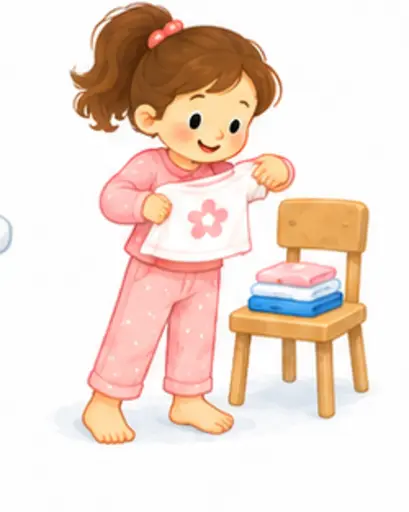
- Evening routine board: for the steps that lead to sleep. Dinner, bath, pajamas, brushing teeth, and a story.
- Daily routine board: when you want to build a personal sequence from the full library of activities, for example for a day off.
- Weekly routine board: to show the week's classes, therapy sessions, and events, so your child knows what each day holds.
- Kids' chores board: to choose illustrated household tasks and check them off.
If this is your first board, start with one routine only, usually the one that is hardest for you right now.
Common mistakes
- Too many steps. A long board is tiring. A short board your child can finish, and feel successful, works better.
- A board forgotten on the wall. In the first days, go over the board together, and instead of giving an instruction, ask: "What's the next step on your board?"
- Using the board as a punishment. The board is a support, not a discipline tool. Praise for a finished step works better than a reminder of what was not done.
- Changing it every day. Update the board when the routine really changes, but not every morning.
Frequently asked questions
At what age can children use a routine board?
Usually from about age two to three, once a child recognizes familiar actions in a picture. For young children, start with a short board of three or four steps.
How long does it take for a routine board to work?
Usually a few days to two weeks of consistent use. At first, go through each step with your child, and then gradually give less help.
Do I need to print the board?
You can print it and hang it at home. With the morning and evening boards you can also send a link to a phone or tablet and check off each finished step there.
What can I do with the boards?
You can build, customize, and print the boards available on this page.
What if my child refuses to use the board?
Involve them in building it, make it shorter, offer choices ("Teeth first or pajamas first?"), and end the sequence with a step they enjoy, such as a bedtime story.
Does a routine board work in preschool or at school?
Yes. Preschool and school teachers use visual schedules to show the order of the day, and the weekly board works well for showing a group the plan for the week.
This information is for general guidance and does not replace personal professional advice. If organizing daily routines is an ongoing difficulty, consider consulting an occupational therapist.